MIT and Hasso Plattner Institute establish collaborative hub for AI and creativity

The following is a joint announcement from the MIT School of Architecture and Planning, MIT Schwarzman College of Computing, Hasso Plattner Institute, and Hasso Plattner Foundation. The MIT Morningside Academy for Design (MAD), MIT Schwarzman College of Computing, Hasso Plattner Institute (HPI), and Hasso Plattner Foundation celebrated the launch of the MIT and HPI AI … Read more
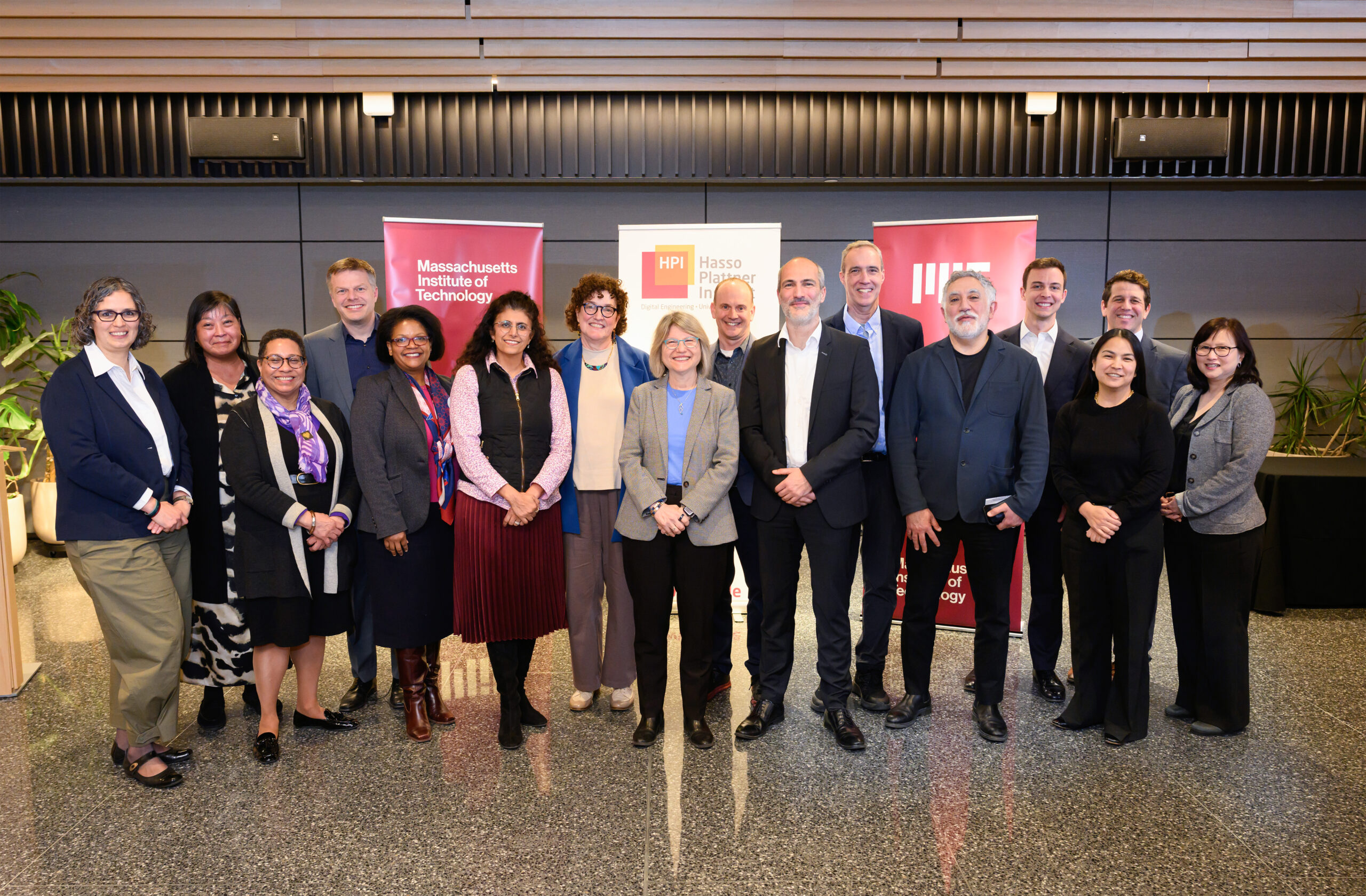
MIT and Hasso Plattner Institute establish collaborative hub for AI and creativity

The following is a joint announcement from the MIT School of Architecture and Planning, MIT Schwarzman College of Computing, Hasso Plattner Institute, and Hasso Plattner Foundation. The MIT Morningside Academy for Design (MAD), MIT Schwarzman College of Computing, Hasso Plattner Institute (HPI), and Hasso Plattner Foundation celebrated the launch of the MIT and HPI AI … Read more
Generative AI improves a wireless vision system that sees through obstructions

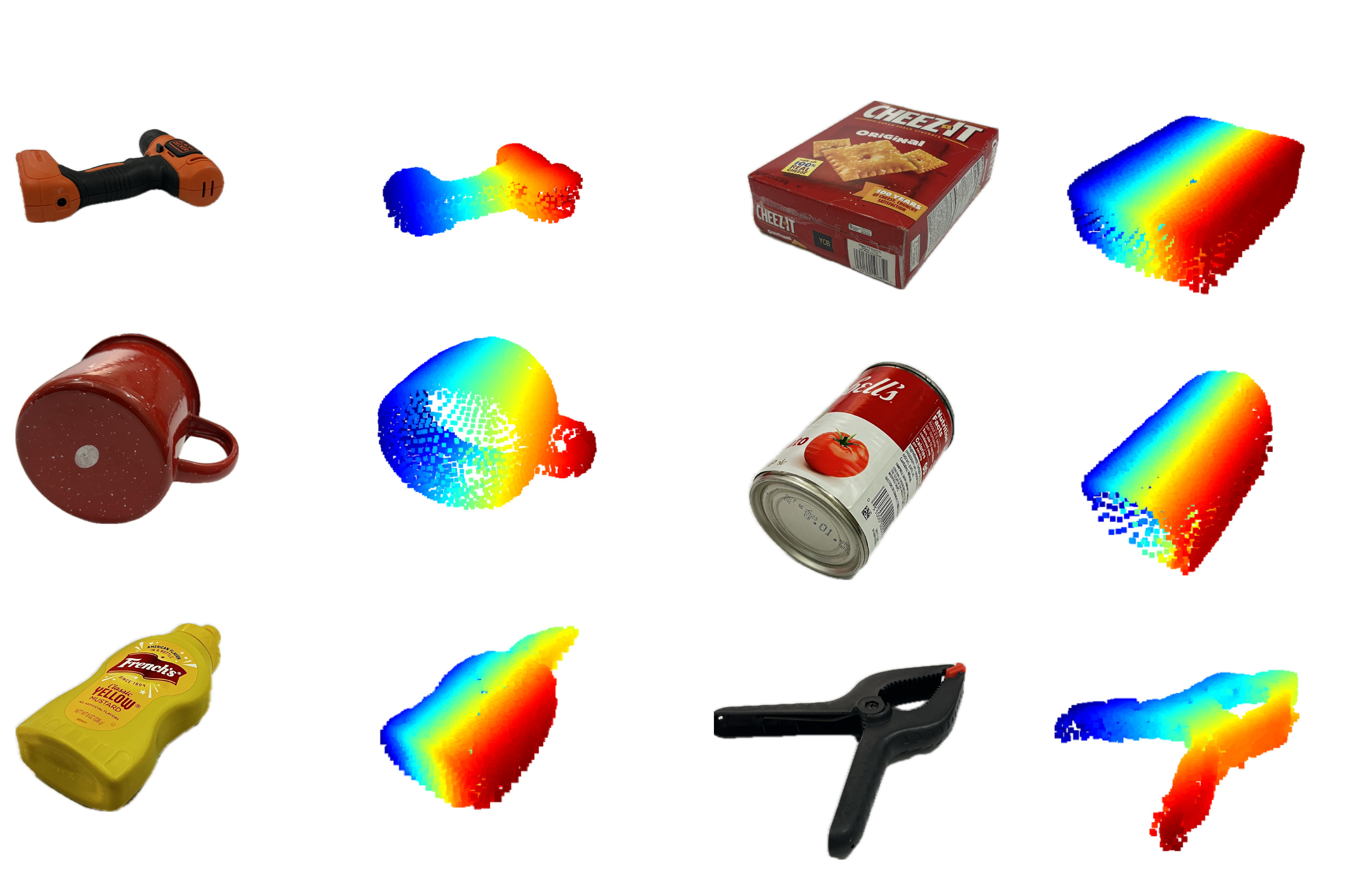
MIT researchers have spent more than a decade studying techniques that enable robots to find and manipulate hidden objects by “seeing” through obstacles. Their methods utilize surface-penetrating wireless signals that reflect off concealed items. Now, the researchers are leveraging generative artificial intelligence models to overcome a longstanding bottleneck that limited the precision of prior approaches. … Read more

A better method for identifying overconfident large language models

Large language models (LLMs) can generate credible but inaccurate responses, so researchers have developed uncertainty quantification methods to check the reliability of predictions. One popular method involves submitting the same prompt multiple times to see if the model generates the same answer. But this method measures self-confidence, and even the most impressive LLM might be … Read more

MIT-IBM Watson AI Lab seed to signal: Amplifying early-career faculty impact

The early years of faculty members’ careers are a formative and exciting time in which to establish a firm footing that helps determine the trajectory of researchers’ studies. This includes building a research team, which demands innovative ideas and direction, creative collaborators, and reliable resources.  For a group of MIT faculty working with and on … Read more

Can AI help predict which heart-failure patients will worsen within a year?

Characterized by weakened or damaged heart musculature, heart failure results in the gradual buildup of fluid in a patient’s lungs, legs, feet, and other parts of the body. The condition is chronic and incurable, often leading to arrhythmias or sudden cardiac arrest. For many centuries, bloodletting and leeches were the treatment of choice, famously practiced … Read more

3 Questions: On the future of AI and the mathematical and physical sciences

Curiosity-driven research has long sparked technological transformations. A century ago, curiosity about atoms led to quantum mechanics, and eventually the transistor at the heart of modern computing. Conversely, the steam engine was a practical breakthrough, but it took fundamental research in thermodynamics to fully harness its power.  Today, artificial intelligence and science find themselves at … Read more

New MIT class uses anthropology to improve chatbots

Young adults growing up in the attention economy — preparing for adult life, with social media and chatbots competing for their attention — can easily fall into unhealthy relationships with digital platforms. But what if chatbots weren’t mere distractions from real life? Could they be designed humanely, as moral partners whose digital goal is to … Read more

A better method for planning complex visual tasks

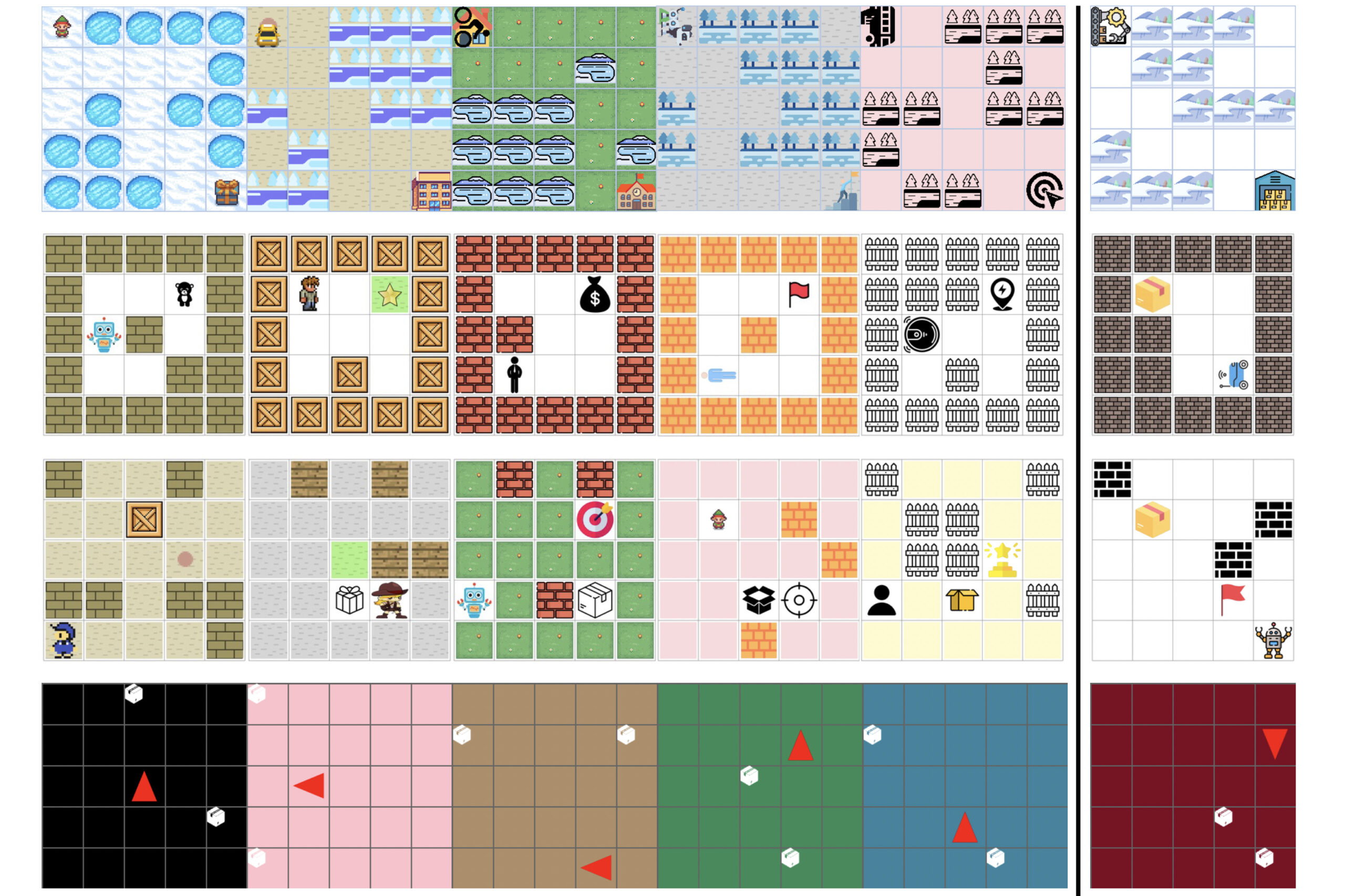
MIT researchers have developed a generative artificial intelligence-driven approach for planning long-term visual tasks, like robot navigation, that is about twice as effective as some existing techniques. Their method uses a specialized vision-language model to perceive the scenario in an image and simulate actions needed to reach a goal. Then a second model translates those … Read more